
Industries › Pest Control Business
Retire From Your Pest Control Business — and Keep Getting Paid
Pest control businesses in Missouri, Kansas, and across the Midwest are built on recurring service routes — typically quarterly or monthly treatment plans — which produce subscription-like revenue predictability that retiring owners can convert directly into monthly income.
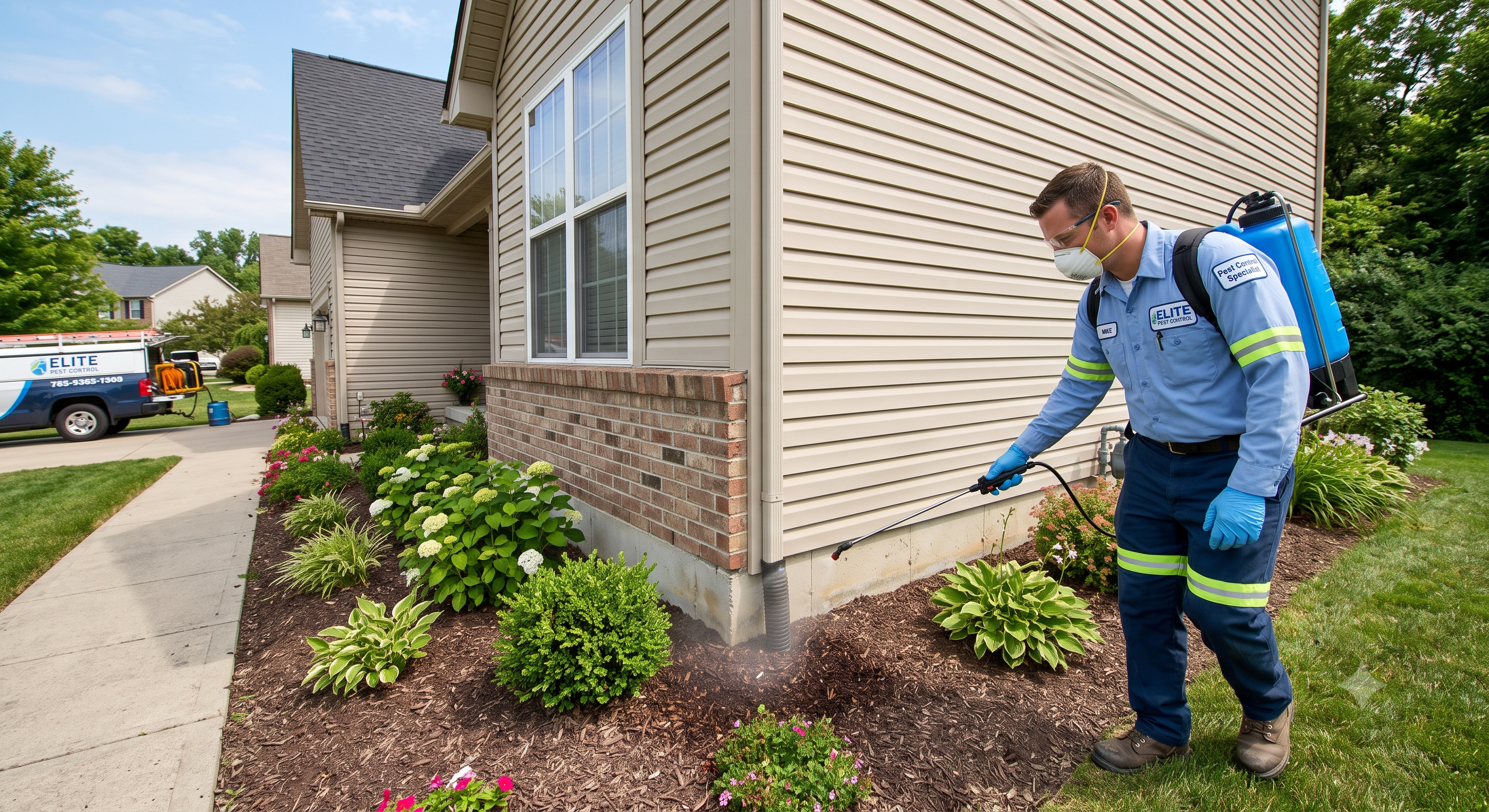
Why Pest Control Business Owners Struggle to Retire
In the Kansas City metro, St. Louis market, and throughout Missouri and Kansas, most residential and commercial pest control revenue comes from renewing service agreements rather than one-time treatments. That recurring base is what makes this trade one of the most transferable for retiring owners: route density and customer retention rate drive both the valuation and the monthly payment a seller receives after stepping away.
Why the Pest Control Business Fits Our Model Well
For Missouri and Kansas pest control operators, transitions typically involve introducing new technicians to long-standing accounts gradually, often alongside the outgoing owner for a period within the existing service territory — preserving the customer trust that drives renewal rates.
What We Look At in a Pest Control Business
- Recurring account count and average contract value across the Missouri/Kansas territory
- Customer retention/renewal rate year over year
- Route density (accounts per service area)
- Applicator licensing and state compliance history in Missouri and Kansas
Typical Financial Profile
Pest control companies with 1,000–2,000 recurring accounts commonly generate $700K–$1.2M in revenue with 16–20% owner profit margins, reflecting the relatively low overhead of route-based service delivery.
What Happens to Your Employees and Customers
Recurring service schedules, technician assignments, and applicator licensing coverage are maintained without disruption through a transition, so Missouri and Kansas customers experience no change in service.
Selling Your Pest Control Business: Common Questions
How do I sell my Pest Control Business?
The most common options are a broker listing, a private equity sale, or a direct retirement partnership like ours. A broker listing can take 12–24 months and costs 10–12% in commissions. Private equity typically requires flipping the business in 3–5 years. We buy directly, transition at your pace, and pay you monthly from the profits instead of a lump sum — no bank, no broker, no auction.
What is my Pest Control Business worth?
Most Pest Control Businesss are valued at 2–4x their annual owner profit (also called SDE — seller's discretionary earnings). A business generating $200K in annual profit might be worth $400K–$800K. The real question isn't just the number today, but how much you receive in total — and our structure often delivers more over time than a discounted lump-sum sale.
Can I retire from my Pest Control Business without using a broker?
Yes. You don't need a broker to retire from your business. We work directly with owners — no listing, no public auction, no commission. The process is completely confidential, which means your employees and customers don't find out you're considering a transition until you decide to tell them.
What happens to my employees when I retire from my Pest Control Business?
In our model, your employees keep their jobs. We're not a private equity firm looking to cut costs — your team is what makes the business valuable, and we protect that. Same crew, same roles, same pay. Employee retention is a core part of how we operate.
How long does it take to retire from my Pest Control Business?
It varies by business, but most transitions are underway within 60–90 days of agreeing on terms. We take as long as the business actually needs for a clean handoff. Unlike a broker listing that can sit on the market for 1–2 years with no guarantee of closing, our process moves on a schedule that works for your situation.
Can I sell my pest control business in Missouri or Kansas and keep getting paid monthly?
Yes. That is the structure we use. We acquire Midwest pest control businesses and pay the retiring owner monthly rather than a one-time lump sum — funded by the recurring route revenue the business already generates.
What is my pest control business worth in the Kansas City area?
Kansas City area pest control businesses are typically valued on recurring account base and retention rate — generally 2.5–4× seller discretionary earnings. Route density within the Missouri/Kansas territory is a meaningful factor in where within that range the business lands.
How is route density factored into an evaluation?
Higher account density per service area generally lowers operating cost per stop and is treated as a positive factor in evaluating the business. For Missouri and Kansas routes, we also look at geographic concentration relative to drive time.
Does seasonal demand affect payment structuring?
Yes — Midwest pest control has seasonal peaks in spring and summer, and payment structures are typically built around a business's actual revenue pattern rather than a flat monthly assumption.