
Industries › Self-Storage Facility
Retire From Your Self-Storage Facility — and Keep Getting Paid
Self-storage facilities generate revenue from unit rentals across a range of unit sizes, with occupancy rate and rate history as the primary financial indicators.
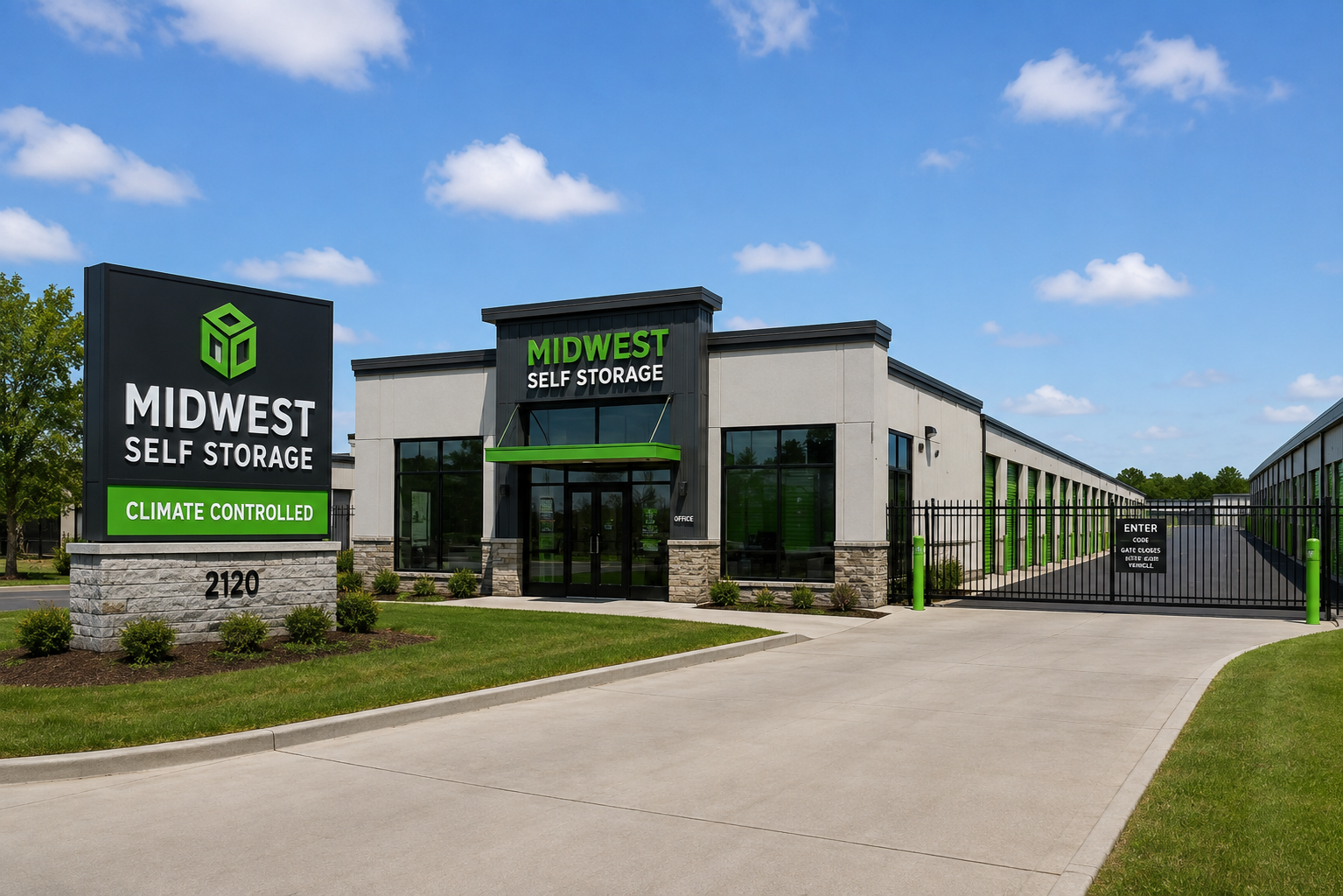
Why Self-Storage Facility Owners Struggle to Retire
Self-storage income is closely tied to the underlying real estate, which means facilities are typically evaluated using metrics common to real estate investment as well as standard business valuation.
Why the Self-Storage Facility Fits Our Model Well
Because the underlying real estate is central to the business, a transition typically involves evaluating the property and the operating business together rather than as separate components.
What We Look At in a Self-Storage Facility
- Historical occupancy rate and rate-growth trend
- Unit mix (climate-controlled versus standard, size distribution)
- Physical condition of the property and security infrastructure
- Local competitive supply
Typical Financial Profile
Self-storage facilities in the 150–250 unit range with stabilized occupancy commonly generate $500K–$800K in revenue with 40–48% owner profit margins, among the higher margins of the cash-flow business category.
What Happens to Your Employees and Customers
On-site staff and existing tenant lease terms are generally maintained without change through a transition.
Selling Your Self-Storage Facility: Common Questions
How do I sell my Self-Storage Facility?
The most common options are a broker listing, a private equity sale, or a direct retirement partnership like ours. A broker listing can take 12–24 months and costs 10–12% in commissions. Private equity typically requires flipping the business in 3–5 years. We buy directly, transition at your pace, and pay you monthly from the profits instead of a lump sum — no bank, no broker, no auction.
What is my Self-Storage Facility worth?
Most Self-Storage Facilitys are valued at 2–4x their annual owner profit (also called SDE — seller's discretionary earnings). A business generating $200K in annual profit might be worth $400K–$800K. The real question isn't just the number today, but how much you receive in total — and our structure often delivers more over time than a discounted lump-sum sale.
Can I retire from my Self-Storage Facility without using a broker?
Yes. You don't need a broker to retire from your business. We work directly with owners — no listing, no public auction, no commission. The process is completely confidential, which means your employees and customers don't find out you're considering a transition until you decide to tell them.
What happens to my employees when I retire from my Self-Storage Facility?
In our model, your employees keep their jobs. We're not a private equity firm looking to cut costs — your team is what makes the business valuable, and we protect that. Same crew, same roles, same pay. Employee retention is a core part of how we operate.
How long does it take to retire from my Self-Storage Facility?
It varies by business, but most transitions are underway within 60–90 days of agreeing on terms. We take as long as the business actually needs for a clean handoff. Unlike a broker listing that can sit on the market for 1–2 years with no guarantee of closing, our process moves on a schedule that works for your situation.
Is the real estate part of the deal, or just the operating business?
The property and operating business are typically evaluated together, since separating them would misrepresent the facility's actual value.
How much does occupancy history matter?
Substantially — a multi-year occupancy trend is one of the most heavily weighted factors in evaluating a self-storage facility.